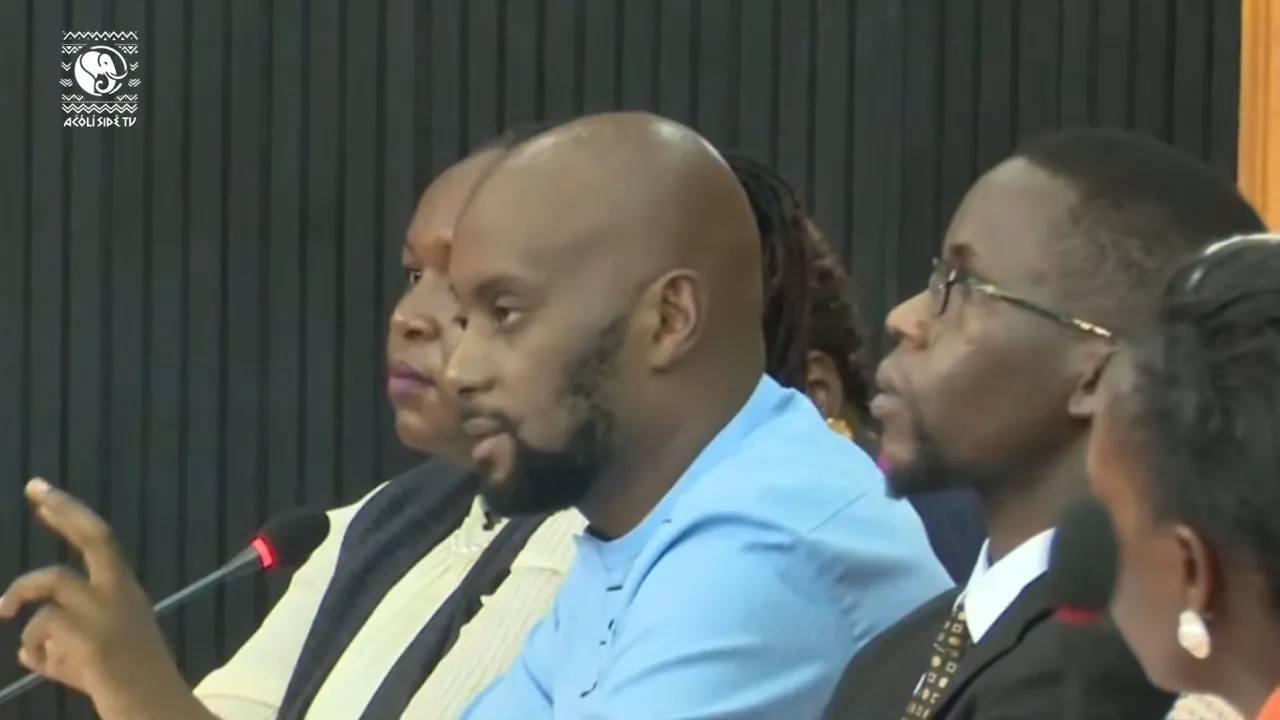
Kampala, Uganda — The Secretary General of the National Unity Platform, Lewis Rubonga, has formally petitioned a parliamentary committee to reject the controversial Sovereignty Bill 2026, describing it as excessive, unconstitutional, and a threat to democratic governance.
Appearing before a committee of the Parliament of Uganda, Rubonga delivered a detailed critique of the bill, focusing particularly on what he termed as “grossly disproportionate penalties” that fail to align with the bill’s stated objectives of protecting Uganda’s sovereignty.
Harsh Penalties Raise Alarm
Rubonga highlighted several clauses within the bill that propose severe punishments, including fines of up to 2 billion Ugandan shillings or prison sentences of up to 20 years — or both.
Among the most contentious provisions:
- Clause 54: Criminalizes the promotion of “interests of a foreigner,” a term Rubonga argued is vague and undefined.
- Clause 64: Penalizes individuals for allegedly exercising government functions without approval.
- Clause 74: Targets those involved in policy development without Cabinet authorization.
He emphasized that these clauses, alongside others such as Clauses 10, 21, 12, 13, 14, 22, and 26, impose penalties that are “excessive, high-handed, and suspicious.”
According to Rubonga, even if the bill’s intentions were legitimate, which he disputes, the punitive measures proposed go far beyond what is necessary.
“Less Restrictive Means Already Exist”
Rubonga argued that Uganda already has sufficient laws to protect its sovereignty without resorting to extreme criminal sanctions.
“Rather than using minimal options available to limit rights, the bill opts for the most restrictive measures,” he stated. “Criminal prosecution with long prison sentences and steep fines is unnecessary when less restrictive mechanisms can achieve the same objectives.”
He maintained that the current legal framework is adequate and that the bill introduces redundancy while simultaneously threatening civil liberties.
Threat to Democratic Participation
In his concluding remarks, Rubonga warned that the Sovereignty Bill 2026 could fundamentally undermine Uganda’s democratic structure.
He argued that:
- The bill centralizes excessive power within the Ministry of Internal Affairs.
- It criminalizes ordinary civic and political engagement.
- It weakens freedoms of association, expression, and participation.
“The bill systematically dismantles the very fabric of civic, political, and associational rights through which Ugandans exercise their sovereignty,” he said.
He further criticized the broad and ambiguous definition of “foreigner,” noting that it could render many provisions constitutionally defective.
Political Targeting Allegations
Rubonga also addressed growing concerns that the bill may be politically motivated, particularly against opposition groups like the National Unity Platform.
He pointed to the government’s discomfort with opposition engagement with the Ugandan diaspora and international platforms, including appearances before bodies such as the European Union Parliament.
“When leaders speak internationally about challenges in Uganda, instead of correcting those issues, the response is to create laws that criminalize legitimate political activity,” he argued.
Call for Democratic Reforms
Rather than introducing restrictive legislation, Rubonga urged the government to address underlying governance concerns.
He called for:
- Free and fair elections
- Protection of civil liberties
- An end to alleged abductions and political intimidation
“If Ugandans are allowed to enjoy their constitutional rights, there would be no need for such laws,” he stated.
Final Appeal to Parliament
Rubonga concluded by urging lawmakers to reject the bill in its entirety and recommend its withdrawal.
“This law is persecutory in nature,” he said. “It is intended to suppress rather than serve the people.”
The committee is expected to continue reviewing submissions from various stakeholders before making its recommendation to the House.
Stay tuned for more updates on Uganda’s legislative developments and political analysis.