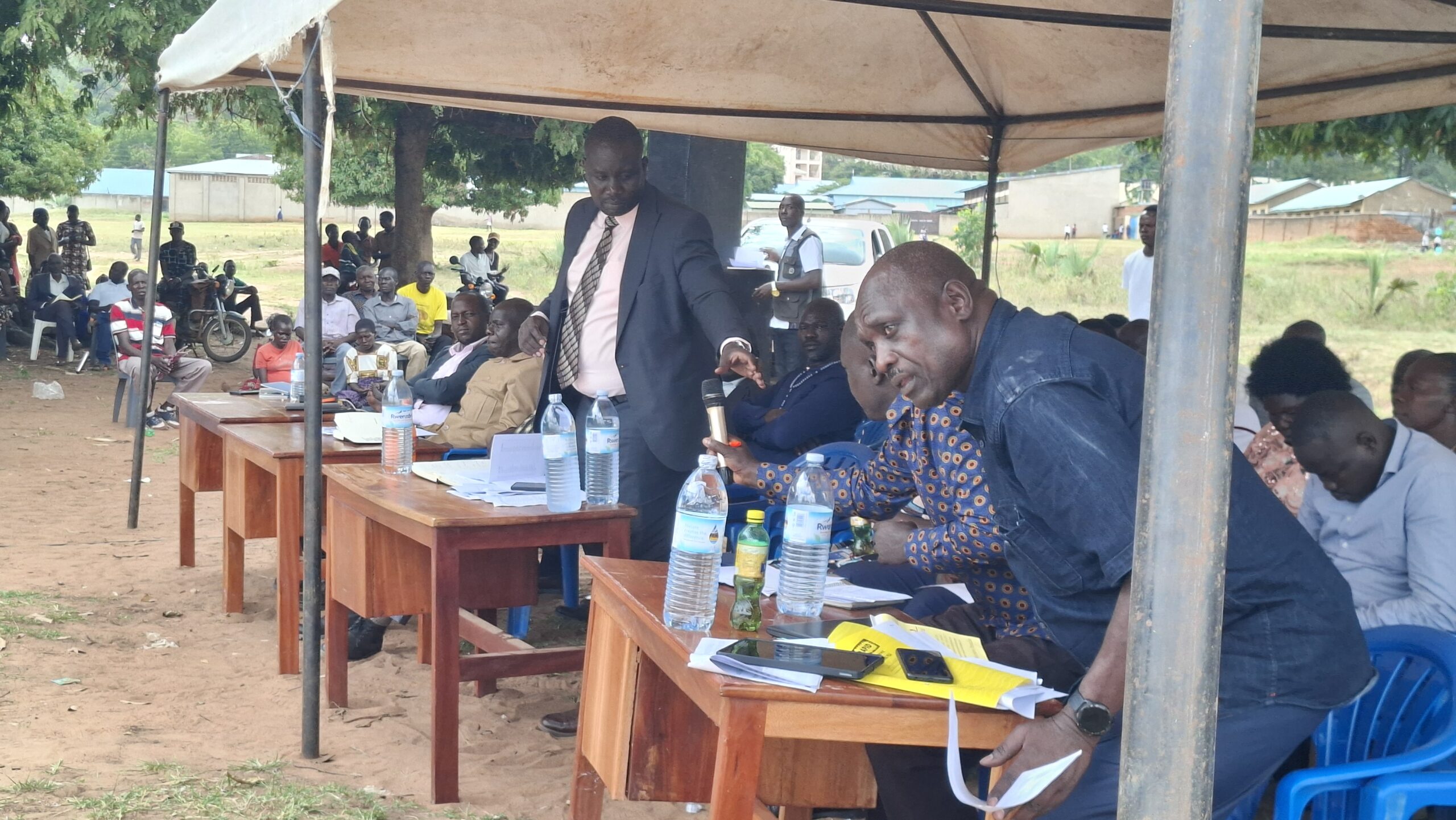
AGAGO, UGANDA – In his comprehensive State of the District address, Agago District LCV Chairperson Wilson Otto presented a detailed breakdown of the Health Department’s performance, challenges, and strategic roadmap for the upcoming fiscal year. Highlighting the critical state of healthcare in the district, the address outlined the goals, infrastructural gaps, and urgent interventions required to serve a rapidly growing population of approximately 310,000 people—one of the largest and most populous in the Acholi Sub-region.
Strategic Mandate and Vision:
The Health Department’s mandate, as outlined by Chairperson Otto, is to provide technical leadership and coordinate the delivery of promotive, preventive, curative, rehabilitative, and palliative health services. The overarching goal is to attain a good standard of health for all people in Uganda to promote healthy and productive lives. This aligns with the department’s mission to provide the highest possible level of health services through the delivery of comprehensive care at all levels.
Overcoming Significant Constraints:
The address acknowledged that the district health system continues to operate under significant constraints. These include inadequate human resources, limited infrastructure, insufficient referral capacity, gaps in electricity and water supply, land ownership/titling challenges, and inadequate funding for health infrastructure and service delivery. Despite these hurdles, the department, working with the District Council, Ministry of Health, and implementing partners, has maintained essential services and implemented priority interventions.
Key Health Indicators:
Chairperson Otto presented a mixed picture regarding key health indicators from the last fiscal year. While OPD attendance reached 484,287 and ANC first-trimester attendance stood at 45.6% (with 99.3% overall ANC1 attendance), other indicators highlighted pressing concerns. Total deliveries were 9,501, with institutional deliveries at 62.2%, falling short of the recommended target of over 65%. Teenage pregnancy stood at 19.3%, a slight drop from 19.2% in FY 2024/25. OPD attendance due to malaria was high at 49.9%, and latrine coverage remained critically low at 51.3%, against a target of over 85%.Financial Allocation for DevelopmentTo address these challenges, the Health Department has outlined a total revenue share of UGX 9,299,786,000 for the fiscal year. This includes UGX 7,255,389,000 in non-wage recurrent funding, UGX 1,491,709,000 from the Development Grant (Formula and Performance Part), and UGX 285,622,000 allocated specifically for Human Capital Development Funding. Additional support includes UGX 100 million from Goal Uganda, UGX 164 million for immunization support from GAVI, and UGX 3.066 million in locally raised revenue.
Infrastructure and Development Projects:
The district has mapped out a detailed workplan for FY 2026/2027, with the entire UGX 285,622,000 development grant directed toward the “Development Grant-formula and performance part.” Key projects include:· Rehabilitation of the OPD at Acholpii HCIII (UGX 70,000,000).· Completion of the OPD block at Kwonkic HCII (UGX 155,259,000).· Retention for the renovation of the OPD at Omiya Pacwa HCII (UGX 4,467,000).· Retention for pit latrine construction at Kuywee HCII (UGX 611,000) and Ogwang Kamolo HCII (UGX 1,470,000).· Retention for phase 1 OPD construction at Kwonkic HCII (UGX 7,135,000).· Retention for the completion of the maternity at Opyelo HCIII (UGX 11,456,000).· Retention for the Lukole HCIII ceiling board (UGX 2,747,000).Project management and monitoring costs, including environmental screening, site handovers, and monitoring by DEC members and sector members, account for UGX 32,477,000.Governance and Technical StructureThe Health Department operates within the overall governance structure of the Agago District Local Government. The governance and oversight structure comprises the District Council, District Executive Committee, District Social Services/Health Sector Committee, and the Chief Administrative Officer, working with the District Health Officer. At the facility level, management is supported by facility in-charges and Health Unit Management Committees, while community-level health is supported by VHTs and the newly introduced Community Health Extension Workers (CHEWs).The technical structure is responsible for a wide range of services, including health planning and budgeting, service delivery, human resources, disease surveillance, maternal and child health, HIV/AIDS and TB services, malaria control, non-communicable disease services, environmental health, and health information management.
Health Infrastructure Network:
The Government health network in Agago currently comprises 24 HC IIs, 14 HC IIIs, and 1 HC IV, totaling 39 government facilities. This is complemented by private-not-for-profit facilities, including Dr. Ambrosoli Memorial Hospital-Kalongo, David Fagerlee Medical Center-Adilang, Sonic-Kworo Hospital-Lamiyo, and St. Janani HC II-Lira Palwo. However, a critical gap remains: the district has no district hospital, despite being the most populous in the Acholi sub-region.
The Plight of Patongo HC IV:
Patongo HC IV, upgraded in December 2023 to provide Comprehensive Emergency Obstetric and Newborn Care (CEmONC), is the only highest-level government health facility in the district. However, it remains significantly under-resourced. It suffers from inadequate staffing, limited capacity to provide CEmONC, and a lack of anaesthesia and theatre personnel. The facility has only one Medical Officer, who has been off duty for most of the past year due to health challenges. The OPD, lab, and general wards are described as “very small and inconducive for quality service delivery,” lacking a mortuary, X-ray machine, and separate latrine for the maternity department. Despite these limitations, the workload is immense, recording approximately 21,800 OPD attendances, 5,245 ANC visits, and nearly 1,400 deliveries in FY 2025/2026.
Geographical Access Gaps:
A major geographical access challenge is that two constituencies (Agago North and Agago West) do not have an HC IV. Furthermore, 12 sub-counties/town councils (Adilang, Agengo, Ajali, Geregere, Kuywee, Laprebong, Lapono, Lira Palwo, Paimol, Wol/Kalongo, and Patongo TC) do not currently have an HC III, as required by policy. This creates long distances to maternity and inpatient services, increased transport and referral costs, inadequate access to high-grade human resources, and delayed access to emergency obstetric care. The department has recommended the progressive establishment and upgrading of facilities in these underserved areas.
Human Resources Crisis:
Human resources remain the “single most critical constraint” affecting health service delivery in Agago. The district has about 402 staff in the health department, but the sector is operating at approximately 32% staffing capacity, with Patongo HC IV standing at a mere 37%. The district currently relies on only one Medical Officer, whose prolonged absence threatens the downgrade of the HC IV to HC III. The department is tirelessly working to recruit additional medical officers.Community Health and Disease SurveillanceCommunity health services are offered by health facilities with the support of VHTs and CHEWs. Agago is implementing a CHEWs program with a total of 234 CHEWs covering all 117 parishes, with training expected to end on September 30, 2026. In terms of disease prevention, the department has responded to a measles outbreak with mass vaccination and conducted mass net distribution in April. Routine activities include integrated disease surveillance, immunization, malaria control, HIV/TB programming, and emergency preparedness.
Maternal and Newborn Health Priorities:
Maternal and newborn health remains a top priority due to the district’s limited higher-level referral capacity. Key priorities include the functionalization of Patongo HC IV CEmONC, recruitment of medical officers and theatre assistants, strengthening maternity services at HC IIIs, improving referral systems, and community mobilization for early care-seeking.
Partnerships and Resource Mobilization:
The department works closely with implementing partners and development agencies to supplement government resources. Key partners include Goal Uganda, JCRC, World Vision, CUAMM, ADRA, UCMB, UHA, Sight Savers Uganda, PACE, Love+ One International, Marie Stopes, FOKAPAWA, PCCO, Fine Mind, and Harvest Thrive.
Critical Challenges Facing the Department:
The address outlined several major challenges:· Human Resources: Very low staffing levels, critical shortage of Medical Officers, inadequate anaesthesia personnel, difficulty recruiting due to inadequate wages, and prolonged absence of critical staff.· Infrastructure: Inadequate health infrastructure, including maternity blocks at Kotomor HCIII and Adilang HCIII, staff houses, a modern OPD at Patongo HC IV, wards, laboratory, mortuary, VIP latrines, placenta pits, and incinerators. There is no district hospital, no HC IV in two constituencies, and 12 sub-counties lack HC III-level services. Many facilities lack fences, electricity, and water.· Referral Services: The absence of a government district hospital means the main referral points are Dr. Ambrosoli Memorial Hospital Kalongo and Gulu/Lira Regional Referral Hospitals. Long distances and bad roads make referrals difficult, and there is a challenge with fuel for ambulance services.· Medicines and Commodities: Periodic stock-outs of essential medicines and programme commodities, including recent shortages of HIV Stat-Pak, CD4 Visitect, and Urine TB-LAM.· Financing: Limited health-sector development funding, with only UGX 282 million allocated for development projects in FY 2026/2027. This is insufficient for bigger projects and maintenance. Insufficient wage for critical recruitment and limited resources for infrastructure maintenance were also cited.
Matters Requiring Committee Support:
Chairperson Otto appealed to the Health Sector Committee and District Council for support in several areas: continued political and administrative support for accountability and quality improvement; strengthening mobilization for EPI, ANC, deliveries, and latrine coverage; advocacy for additional health-sector funding; support for redistribution of equipment to underserved facilities; prioritization of underserved constituencies; support for electricity and water connectivity; support for land titling; strengthening ambulance and referral services; and continued support for disease outbreak preparedness.
Conclusion:
In conclusion, the Agago District Health Department continues to provide essential health services despite significant human resource, infrastructure, financing, and geographical challenges. Chairperson Otto emphasized that sustained improvement will require strategic investment in human resources, infrastructure, water, electricity, referral systems, medicines, and community health services. He requested the Health Sector Committee’s continued support and advocacy to address these priority gaps and ensure that the people of Agago have equitable access to quality and timely health services.